Natural vs Artificial Snow in the Winter Olympics
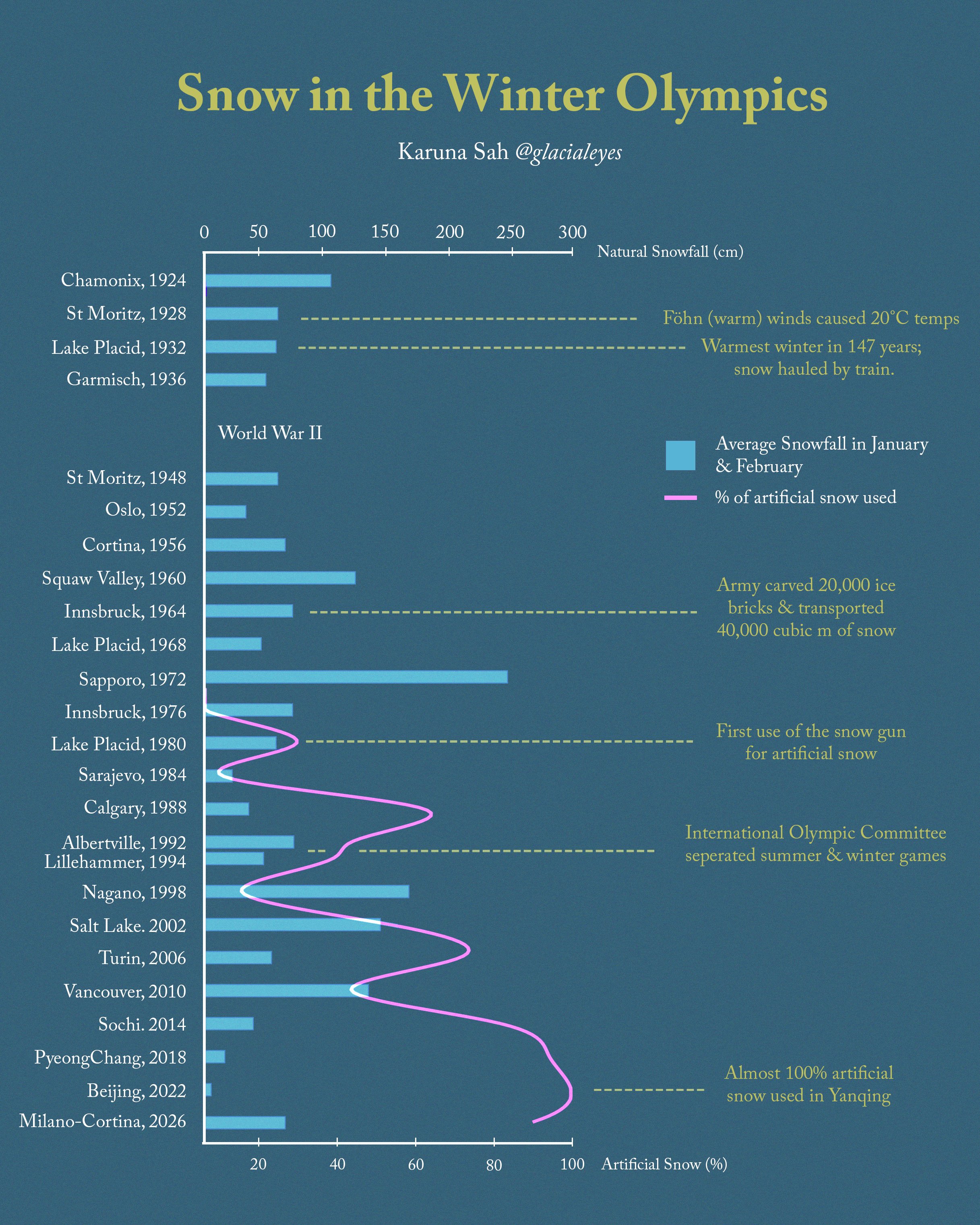
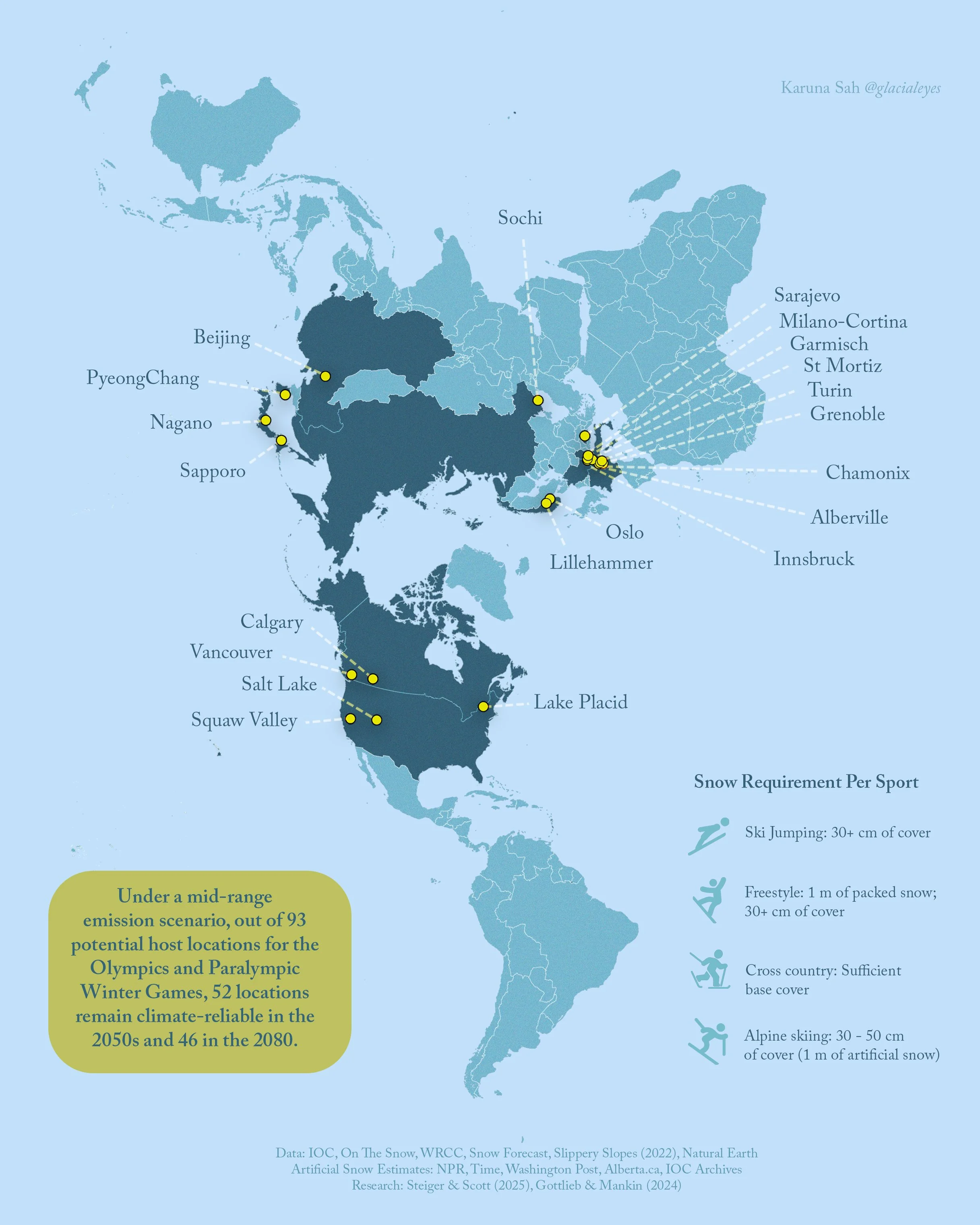
Amidst talks of the IOC moving the winter games to January for more reliable snow, let’s look at general trends. Artificial snow making made it’s olympic debut at Lake Placid in 1980, and hosts are increasingly reliant on it today. According to reports, 95% of ski resorts worldwide depend on it. As I was looking at snowfall data from ski areas, the general trend showed that January gets more snowfall than February across host sites. And with only half of the potential host sites to be climatically reliable by 2050, an earlier start does make logistical sense. A 2024 Nature study on the links between snowpack loss and humans concluded that 82 of 169 major river basins in the Northern Hemisphere experience snowpack loss, and 31 are confidently attributed to human influence. They found the critical threshold to be -8 °C; for every degree increase in temperature, snow becomes marginally more sensitive, non-linearly, to melting and loss. The data is clear. The systemic response, less so.